

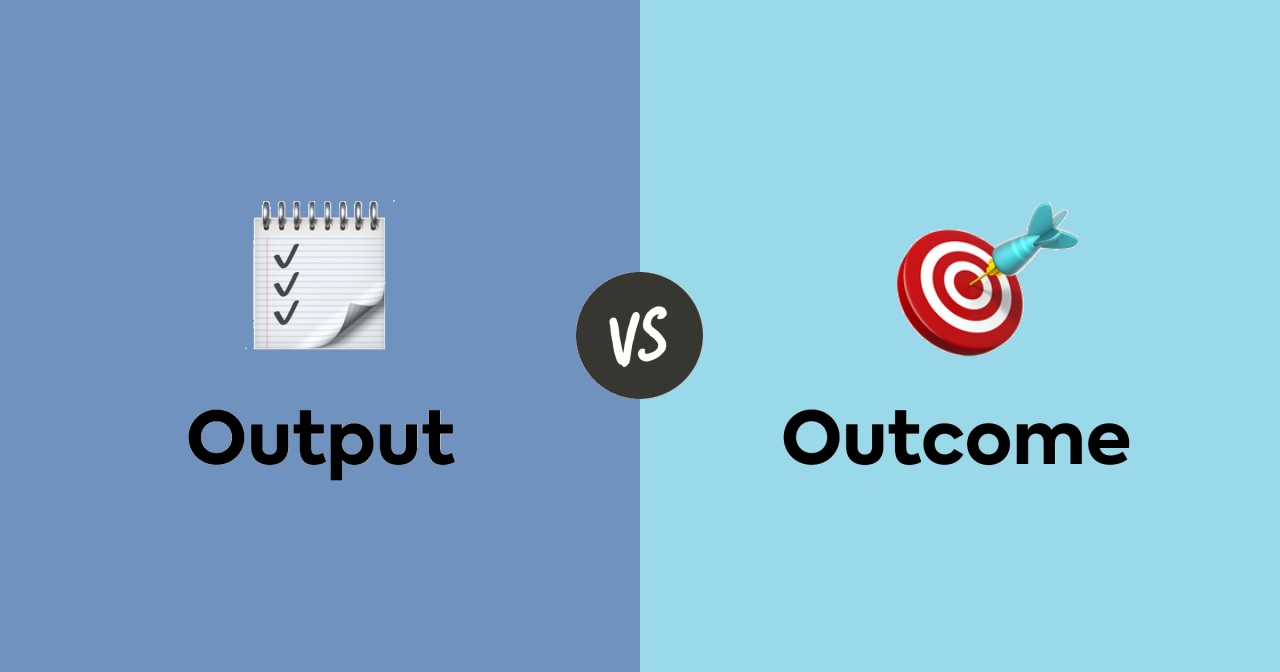
In today’s fast-paced world, many professionals and organizations find themselves buried under endless tasks, reports, and projects that seem to consume more time than they deliver real value. It’s easy to confuse activity with progress, but being busy does not necessarily mean being effective. The true shift happens when businesses and individuals stop focusing solely on producing outputs and instead prioritize meaningful outcomes. This distinction between outcome vs output is what separates routine work from genuine breakthroughs.
Understanding outcome vs output is vital for anyone aiming to achieve long-term success. Outputs are the tangible deliverables like the number of reports created, meetings scheduled, or products launched. Outcomes, on the other hand, represent the real-world impact of these deliverables, such as customer satisfaction, revenue growth, or improved employee engagement. When organizations learn to place greater importance on outcomes, they align their efforts with strategic goals, create stronger value, and inspire continuous innovation.
One of the main challenges organizations face is getting trapped in output-driven thinking. Leaders might track how many tasks a team completes or how quickly projects move forward. While these metrics provide a sense of productivity, they don’t always reflect the actual results. For example, a marketing team might publish twenty blog posts in a month, but if none of them attract the right audience or drive meaningful conversions, the activity remains just busy work. This is where the concept of outcome vs output becomes critical focusing on outcomes ensures that every output contributes directly to a bigger vision.
When applied correctly, this mindset creates clarity. Employees begin to see the “why” behind their work, not just the “what.” Instead of merely checking items off a to-do list, teams can ask: Does this activity bring us closer to the change we want to see? That simple shift transforms motivation, ownership, and performance. It makes work more purposeful because people understand how their contributions matter beyond the immediate task.
Take project management as an example. An output-oriented team might measure success by the number of features developed for a new software product. Yet, if users struggle with those features or fail to adopt them, the outputs lose their value. On the other hand, an outcome-oriented team measures success by whether the product improves customer experience or reduces user frustration. This approach not only guides better decision-making but also encourages innovation, as teams continuously refine their work to achieve the desired results.
Outcome-focused thinking also has a powerful impact on leadership. Managers who emphasize outcomes empower their teams to make decisions and experiment with solutions. Instead of micromanaging every step of the process, they set a clear direction and allow flexibility in how to get there. This fosters creativity, agility, and resilience—all qualities essential for thriving in competitive markets. Leaders who embrace outcomes over outputs build a culture where success is measured by real value delivered rather than hours logged or tasks completed.
The benefits extend beyond the workplace too. Individuals who adopt this mindset in their personal lives often experience greater fulfillment. For instance, someone might set an output-based goal of exercising five times a week. While this shows consistency, the deeper outcome might be improved health, more energy, and better mental clarity. When the focus shifts toward these outcomes, it becomes easier to adapt routines, stay motivated, and sustain positive habits over time.
Making the transition from output to outcome thinking requires intentional effort. Start by clarifying the results you want to achieve and then evaluate whether your current activities contribute to those results. Create metrics that measure impact instead of only effort. Encourage feedback loops so that teams and individuals can adjust their approaches when outputs are not creating the desired effect. With practice, this new perspective becomes second nature.
In conclusion, the distinction between outcome vs output holds the key to moving from busyness to breakthroughs. While outputs are important milestones, they are only meaningful when they contribute to outcomes that matter. By shifting focus toward outcomes, organizations and individuals alike can unlock higher performance, greater satisfaction, and more sustainable success. It’s not about doing more—it’s about achieving better results that truly make a difference.
Comments are closed.